
Ponds Built to Hold Water Reliably
Pond Digging and Rural Excavation in Robards for farms and acreage properties needing water storage, livestock access, or land reshaping
Clay soil layers beneath topsoil in Western Kentucky create natural sealing conditions that allow ponds to hold water without constant seepage, but excavation must reach those clay layers and compact them properly during shaping. Ponds fail when excavation stops in sandy or silty zones that leak water faster than runoff can refill the basin, or when slopes are cut too steep and collapse into the water over the first winter. PRIEST HAULING & EXCAVATING digs ponds for livestock watering, irrigation storage, recreational use, and drainage management on rural properties where water collection serves agricultural or land improvement purposes.
Pond excavation includes shaping basins to maintain stable side slopes, establishing overflow channels that prevent embankment erosion during heavy runoff, and moving soil to build berms or level adjacent land. Depth is determined by intended use—livestock ponds need shallow access zones, while recreational ponds require deeper centers to avoid summer stagnation and winter freezing to the bottom. Equipment operates across uneven terrain, cuts through root masses in wooded areas, and handles large dirt movements needed to reshape land around the pond footprint.
Request a property evaluation to assess soil conditions, drainage flow, and pond sizing based on your land use needs.
Digging begins with clearing vegetation and topsoil from the pond area, then excavating into subsoil layers until clay is exposed and compacted into the basin floor and walls. Slopes are cut at angles that remain stable without slumping—typically three-to-one or flatter depending on soil type. Excess dirt is spread across the property to fill low areas, build up access roads, or create berms that enhance water retention.
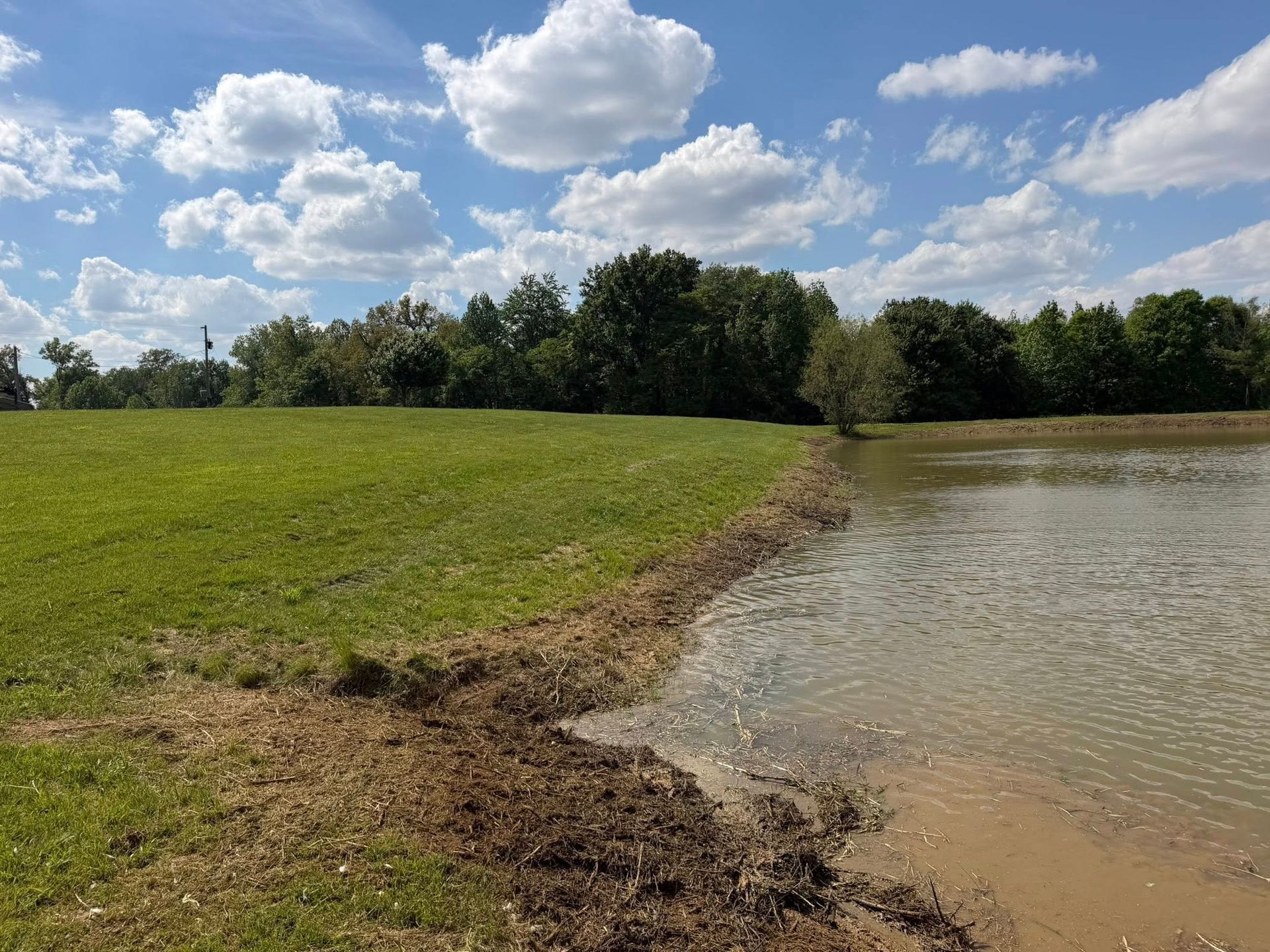
After excavation, the pond begins filling from groundwater seepage and surface runoff, and you see water levels rise within weeks if the clay seal is intact. Side slopes hold their shape without erosion gullies, and overflow channels carry excess water away from the dam or embankment during storms. The pond functions as intended for livestock access, irrigation pumping, or recreational fishing without requiring liner installation or constant refilling.
Rural excavation also includes land reshaping for better drainage, dirt movement to level building sites on sloped properties, and clearing access paths for equipment or vehicles. Jobs on large acreage require coordination with property owners to mark utility lines, preserve tree zones, and plan dirt placement that improves overall land usability. Properties with heavy equipment restrictions due to wet ground or steep grades need excavation scheduled during dry periods when soil supports machine weight without rutting.
What Property Owners Usually Ask
Landowners considering pond projects often have questions about site selection, water retention, and how soil conditions affect excavation success.
What makes a good location for a pond?
Sites with natural low points that collect runoff, clay subsoil for sealing, and enough drainage area to keep the pond filled year-round work best for water retention.
How deep should a farm pond be for livestock?
Minimum depth of six to eight feet in the center prevents complete freezing in winter and maintains water quality, with shallow zones around edges for animal access.
Why do some ponds lose water after they are dug?
Excavation that stops in sandy or permeable soil layers allows water to seep out faster than runoff can replace it, and compaction failures leave voids that drain the basin.
What happens to dirt removed during pond digging in Robards?
Soil is spread across the property to level building areas, fill eroded sections, or create berms—excess dirt is hauled off if the property cannot accommodate it.
When is the best time to dig a pond?
Late summer through early fall provides dry soil conditions that allow equipment to operate efficiently and expose subsurface layers for accurate assessment before excavation depth is finalized.
PRIEST HAULING & EXCAVATING evaluates soil conditions, site topography, and drainage patterns before beginning pond excavation to confirm the site will hold water reliably. Discuss your pond project with our crew to review options and schedule excavation that fits your land improvement timeline.