
Water Redirected Before It Damages Property
Drainage Solutions in Robards for yards with standing water, eroded driveways, and properties where runoff threatens foundations or structures
Standing water that lingers for days after rain, gullies that deepen each storm, and saturated ground near foundations all indicate drainage systems that either don't exist or no longer function as land use and water flow patterns changed over time. Property owners across Robards see these problems worsen gradually—driveways develop potholes where water collects, basement walls show moisture staining, and lawn equipment sinks into soft ground that never fully dries. PRIEST HAULING & EXCAVATING installs culverts, grades ditches, lays drainage pipe, and reshapes ground to move water away from structures and off properties before it causes foundation movement, pavement failure, or unusable outdoor areas throughout the growing season.
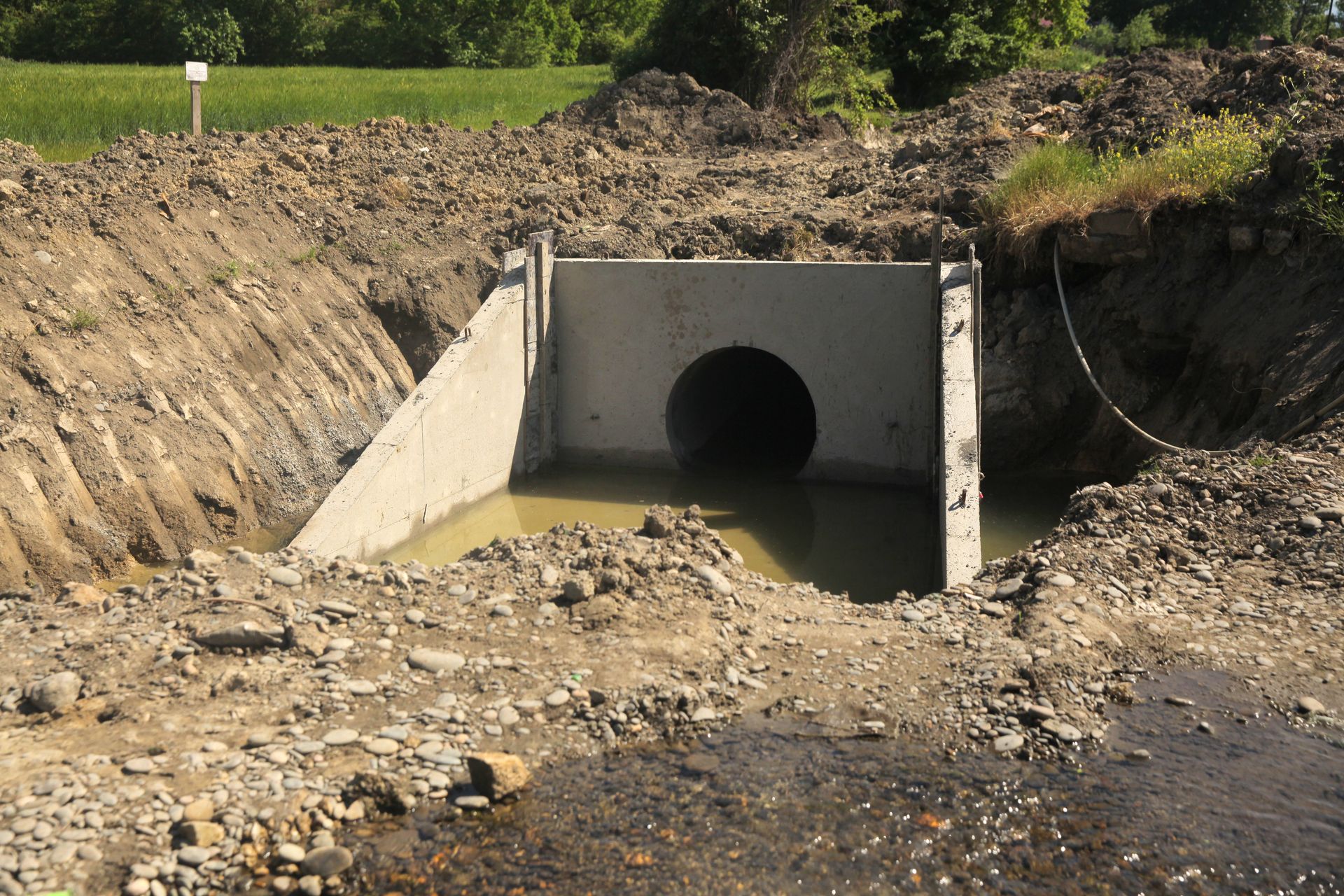
Drainage work begins with identifying where water originates, how it moves across the property, and where it needs to go—whether into existing ditches, culverts, or natural drainage courses that eventually reach creeks or retention areas. Solutions include installing corrugated metal or plastic culverts under driveways to pass water from uphill areas, cutting and grading roadside ditches to maintain consistent slope toward outlets, and burying perforated pipe in gravel-filled trenches that collect subsurface water before it surfaces in yards or near buildings.
Arrange a property evaluation to map current drainage patterns and identify redirection options.
Effective drainage relies on gravity and properly graded pathways that move water continuously without creating new low spots or erosion zones. French drains—trenches filled with gravel surrounding perforated pipe—intercept groundwater before it reaches problem areas, while surface grading directs runoff away from foundations at slopes steep enough to prevent ponding but gradual enough to avoid washing topsoil. Western Kentucky clay soils drain slowly, so systems must account for water moving across the surface during heavy rain rather than soaking in immediately, which is why swales and ditches often handle residential drainage more effectively than relying solely on underground pipe.
After drainage installation, you'll see water flowing away from structures during storms instead of pooling against foundations, driveways that shed runoff into ditches rather than holding puddles that freeze and crack pavement, and yards that firm up within a day or two after rain instead of staying saturated for weeks. Properly graded ditches maintain visible flow during rain events, and culverts pass water without backing up or washing out driveway edges.
Some properties require multiple drainage components working together—catch basins that collect surface water and connect to underground pipe, riprap or erosion fabric that stabilizes ditch banks in steep areas, and outlet structures that release water gradually to prevent downstream erosion. Agricultural properties may need tile drainage systems that lower water tables in crop fields, while residential lots often benefit from regrading that eliminates depressions where water collects far from any outlet.
Common Questions About This Service
Drainage projects involve evaluating site-specific water movement and selecting solutions that address root causes rather than symptoms. These questions cover typical concerns property owners raise before starting work.
What causes standing water that wasn't a problem before?
Changes in surrounding land use, new construction uphill, or compacted soil from equipment traffic all alter how water moves across properties. Ground that once absorbed rainfall may now shed runoff toward your property, overwhelming existing drainage paths or creating new problem areas where water collects with nowhere to go.
How deep do drainage pipes need to be installed?
Typical residential drainage pipe sits 18 to 24 inches deep to stay below frost penetration and root zones while maintaining enough slope—usually one percent grade minimum—to keep water flowing toward outlets. Deeper installations may be necessary to daylight at lower elevations or connect with existing drainage infrastructure.
Why do ditches need regular maintenance after installation?
Sediment washes into ditches during storms, gradually filling the channel and reducing flow capacity until water overtops banks or backs up during heavy rain. Vegetation also grows along ditch banks, slowing water movement and trapping debris that blocks flow. Periodic regrading removes accumulated sediment and restores original depth and slope.
What drainage solutions work best in Robards for clay soil?
Surface grading and open ditches often outperform underground pipe alone because clay sheds water across the surface rather than allowing it to infiltrate and reach buried drains. Combining surface and subsurface drainage—swales that direct runoff plus French drains that intercept shallow groundwater—handles both immediate storm flow and lingering saturation that takes days to clear.
How long before drainage improvements show results?
Changes appear immediately during the first significant rain after installation—water flows through new pathways instead of ponding, and saturated areas begin drying as subsurface drains lower groundwater levels. Full improvement may take several weeks as clay soils slowly release trapped moisture into drain systems.
PRIEST HAULING & EXCAVATING handles drainage projects across residential, commercial, and agricultural properties in Western Kentucky. Schedule a drainage evaluation to identify long-term solutions for your property's water management needs.