
Ground Work Built for Real Project Demands
Excavation Services in Robards for residential lots, commercial sites, and agricultural properties needing foundation prep or drainage trenching
PRIEST HAULING & EXCAVATING provides excavation services across Robards and Western Kentucky for property owners preparing sites for construction, installing drainage systems, or moving dirt for land improvement projects. Whether you're clearing ground for a new home foundation, grading a commercial pad, or trenching for utilities, the work involves more than running equipment—it requires reading the ground, understanding how water moves through Western Kentucky clay and loam soils, and setting grades that prevent settling or runoff problems years down the line. You'll see the difference in how the site drains after heavy rain and how stable the ground stays under new structures.
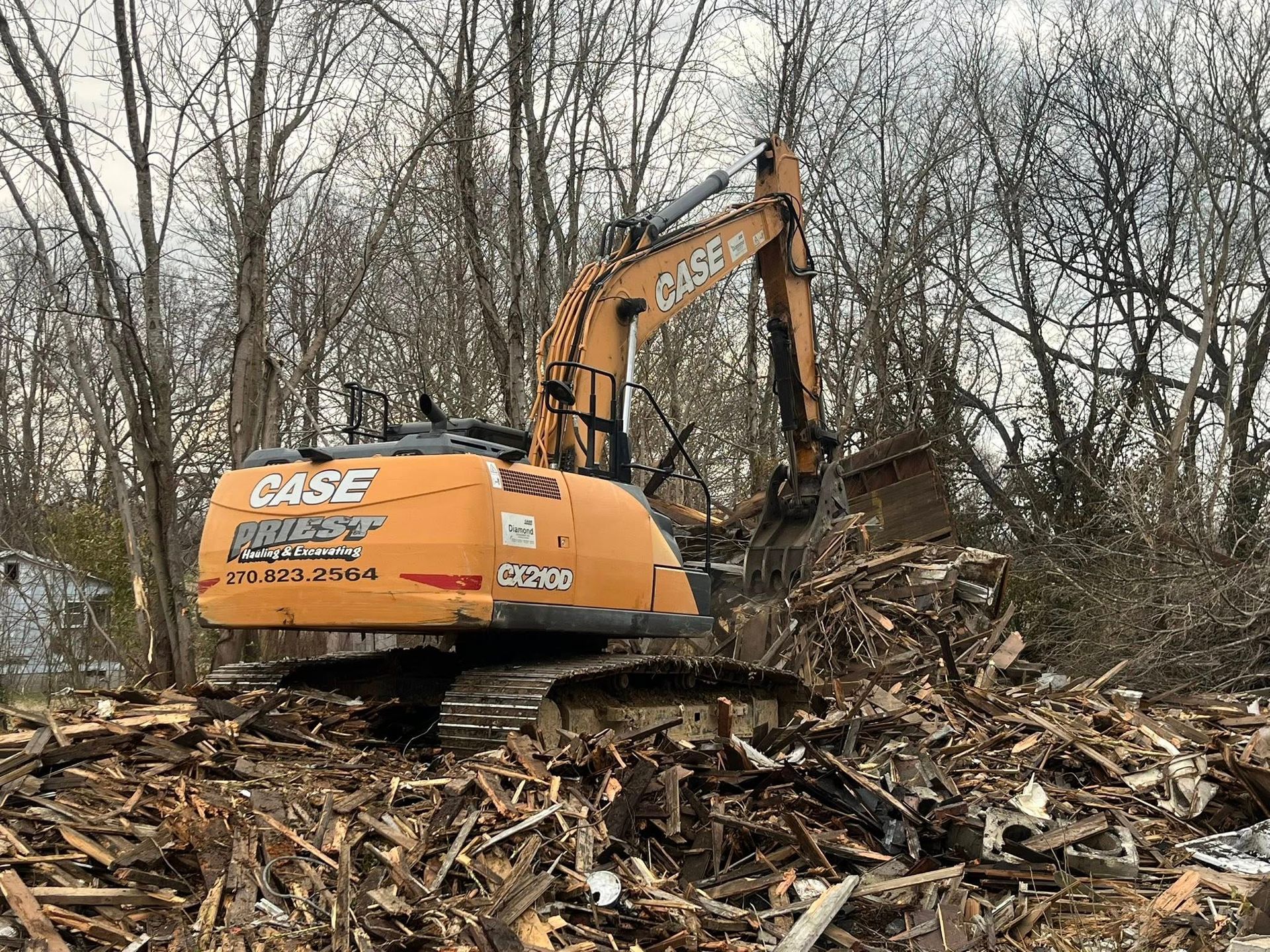
The excavation process starts with evaluating existing site conditions, locating utilities, and determining cut and fill requirements based on your project plans. Equipment choices vary depending on site access, soil type, and depth requirements—track hoes handle deeper foundation excavation and precision trenching, while dozers move larger volumes of dirt for rough grading. In Western Kentucky, the clay content in most soils means timing matters: excavating during wet conditions creates compaction issues that affect drainage and stability long after the project wraps.
Schedule a site evaluation to review excavation requirements and project access before breaking ground.
Site excavation involves stripping topsoil, cutting to required depth and dimensions, hauling excess material off-site or redistributing it for grading, and verifying that elevations match engineering plans or drainage requirements. Trenching for water lines, sewer laterals, or drainage pipe requires maintaining proper slope throughout the run—typically a quarter-inch per foot for gravity-fed systems—and backfilling with compacted material that won't settle and crack pipes or pavement later. Foundation excavation includes accounting for frost depth, which in this region sits around 18 inches, and ensuring the base stays dry during concrete placement.
Once excavation finishes, you'll notice the site holds defined grades that direct water away from building areas, trenches maintain consistent depth without low spots where water collects, and cleared ground provides stable access for concrete trucks and material deliveries. The difference shows up immediately after the first significant rain—properly excavated sites shed water toward drainage pathways instead of pooling near foundations or creating muddy access routes.
Excavation work also includes coordinating with other trades, protecting adjacent structures or landscaping from equipment damage, and maintaining safe trench walls if depth exceeds four feet. Projects may require dewatering pumps if groundwater seeps into trenches, particularly in low-lying areas or during spring months when the water table rises across Henderson County.
What Property Owners Ask Before Starting
Excavation projects raise practical questions about site conditions, equipment access, and what gets included in the work. These answers clarify what happens before and during excavation.
What preparation does excavation require before equipment arrives?
Utility locates must be completed through Kentucky 811 at least two business days before digging starts, and you'll need to mark property boundaries if working near lot lines or easements. Site access should accommodate equipment trailers—typically requiring 12-foot clearance width and firm ground that supports 30,000-pound machines without rutting.
How does soil type in Robards affect excavation work?
Western Kentucky clay becomes sticky and unworkable when wet, clinging to equipment and compacting into dense clumps that don't spread or grade properly. Dry conditions allow cleaner cuts and better compaction control, which is why most experienced operators avoid excavating during prolonged wet periods unless dewatering and stabilization measures are in place.
What gets hauled away versus redistributed on-site?
Topsoil usually gets stockpiled for later use in landscaping, while clay subsoil can be used for fill if it's free of organic material and roots. Excess dirt, rock, or unsuitable material gets hauled off-site, with disposal affecting overall project costs depending on volume and haul distance.
When should excavation happen relative to other construction phases?
Foundation excavation typically occurs after clearing and rough grading but before concrete crews schedule pours, ensuring the hole stays dry and dimensions stay accurate. Utility trenching coordinates with plumber and electrician schedules so lines get installed and inspected before backfilling begins.
How long does typical residential excavation take?
A standard house foundation excavation usually takes one to two days depending on depth, access, and soil conditions, while larger commercial pads or extensive trenching projects stretch across multiple days as equipment systematically cuts, hauls, and grades according to site plans.
PRIEST HAULING & EXCAVATING handles excavation projects across residential, agricultural, and commercial properties throughout Western Kentucky. Request a free excavation estimate to review your site conditions and project timeline.