
Property Prepared for Development and Use
Land Clearing in Robards for overgrown lots, wooded acreage, and farm properties needing brush removal before construction or improvement projects
When property sits unused for years, brush, saplings, and undergrowth create dense vegetation that blocks access, hides drainage problems, and prevents development or agricultural use. PRIEST HAULING & EXCAVATING clears residential lots, commercial sites, and farm acreage throughout Robards and Henderson County, removing trees, grinding stumps, hauling debris off-site, and leaving ground ready for grading or construction. Western Kentucky's growing season produces thick stands of cedar, locust, and hardwood saplings that spread aggressively across open land—clearing involves cutting at ground level, removing root masses that interfere with future grading, and addressing the volume of material that accumulates during removal.
Land clearing includes felling and removing trees, cutting and hauling brush, grinding or removing stumps below grade, and clearing debris down to bare soil. Equipment selection depends on clearing scope: forestry mulchers grind smaller vegetation into mulch that decomposes on-site, while track hoes with grapples handle larger trees and root removal for sites requiring clean ground before excavation or grading begins.
Request an on-site assessment to evaluate vegetation density and clearing requirements for your property.
Clearing operations remove visible vegetation while addressing root systems that interfere with construction or future land use. Stumps left in place create soft spots that cause settling under driveways, foundations, or equipment pads as wood decomposes over several years. Grinding stumps six to twelve inches below final grade removes enough material to prevent future settling issues while allowing topsoil placement and grass establishment. Brush piles and debris get loaded and hauled to disposal sites rather than burned on-site, avoiding air quality violations and uncontrolled fire risks in dry conditions.
After clearing completes, you'll notice unobstructed views across the property, defined boundaries and access routes that equipment and vehicles can navigate, and ground conditions that reveal drainage patterns or low areas requiring fill before construction starts. Cleared land also shows property features—rock outcroppings, existing drainage swales, or wet spots—that weren't visible through dense vegetation and affect development planning.
Clearing projects may include selective tree removal that preserves desirable shade trees or boundary vegetation while opening interior areas for building sites or pasture use. Some properties require addressing invasive species like autumn olive or multiflora rose that resprout aggressively, necessitating follow-up treatments or grading that buries root crowns under compacted fill.
Questions About Clearing Overgrown Property
Property owners preparing land for future use typically ask about debris disposal, timing considerations, and what condition the ground will be in after clearing finishes.
What happens to cleared trees and brush?
Debris gets loaded onto trucks and hauled to landfills or recycling facilities that accept green waste, with disposal costs based on volume and material type. Some hardwood logs may have salvage value depending on size and species, reducing overall haul costs if timber buyers operate in the area.
How does clearing affect existing drainage on the property?
Removing vegetation exposes ground contours and reveals how water moves across the site during rain—areas that appeared flat under brush may show slopes or depressions requiring grading to prevent erosion or standing water. Clearing also eliminates roots that previously absorbed rainfall, sometimes increasing runoff until grass or groundcover reestablishes.
When is the best time to clear land in Western Kentucky?
Late fall through early spring offers the best clearing conditions when ground stays firm enough to support equipment without excessive rutting and before spring growth starts. Clearing during summer months works if ground conditions stay dry, but dense leaf cover and active growth make vegetation harder to handle and dispose of efficiently.
What gets left behind after clearing?
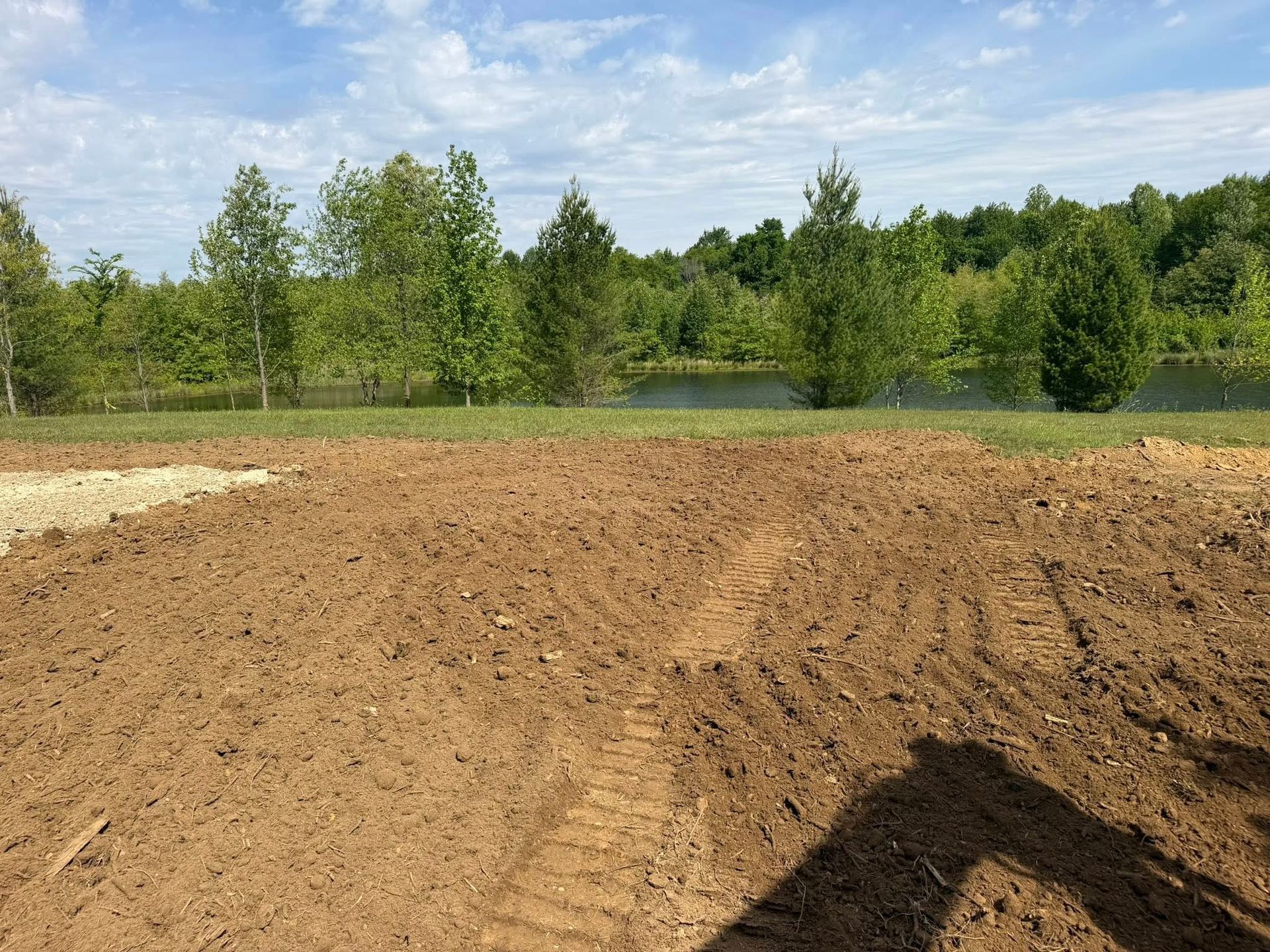
The site will show bare soil with stumps ground below grade, small root fragments that decompose naturally, and ground compacted by equipment traffic in work areas. Finish grading typically follows clearing to smooth ruts, establish final grades, and prepare for topsoil placement or seeding.
How much clearing can equipment handle in a day?
Clearing rates vary widely based on vegetation density and tree size—open brush with scattered saplings may clear at two acres per day, while mature hardwood forest with dense undergrowth progresses closer to half an acre per day as equipment handles larger material and more debris volume.
PRIEST HAULING & EXCAVATING manages land clearing projects across residential, agricultural, and commercial properties in Western Kentucky. Contact us to schedule a site visit and receive a detailed clearing estimate based on current property conditions.