
Access Routes Built to Handle Weather
Gravel Driveway Installation in Robards for rural properties, farm entrances, and residential lots needing durable access that drains properly year-round
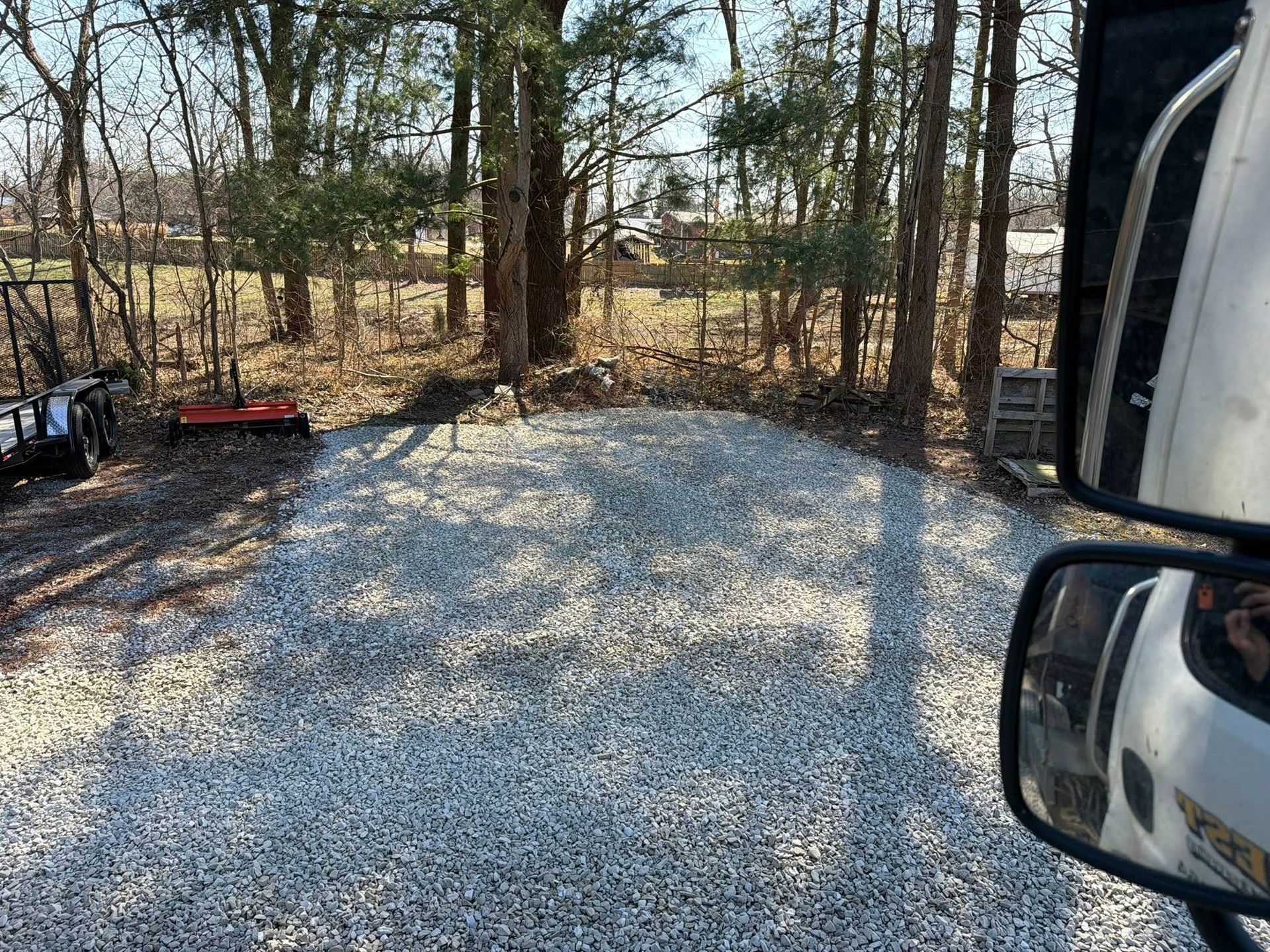
Gravel driveways function reliably across rural Western Kentucky properties when built with proper base preparation, drainage grading, and material selection that handles heavy vehicles and seasonal weather changes. Driveways that wash out during storms, develop ruts that hold water and mud, or require constant regrading usually lack adequate base depth or crown that sheds runoff toward edges instead of channeling it down the center. PRIEST HAULING & EXCAVATING installs and repairs gravel driveways across Robards and Henderson County, preparing bases that prevent settling, establishing grades that maintain drainage, and placing crushed stone that packs firmly under traffic while resisting erosion during heavy rain.
Driveway installation starts with excavating the path to remove topsoil and organic material, then placing a base layer of larger crushed rock—typically two to four inches in size—that bridges soft spots and provides stable support for surface gravel. The base gets graded with a crown or cross-slope, usually three to five percent, so water runs off into ditches or surrounding ground rather than pooling in the travel path. Surface gravel uses smaller crushed stone that compacts tightly and interlocks under vehicle weight, creating a firm driving surface that resists rutting and displacement.
Arrange a property visit to evaluate access requirements and develop a driveway plan suited to your site conditions.
Durable gravel driveways rely on adequate base depth—usually six to eight inches of compacted stone for residential use and up to twelve inches for farm drives handling loaded trucks and equipment. Base material provides structural support, while surface gravel maintains the driving surface and appearance. Crown grading directs water off the driveway continuously during rain rather than letting it soak in and soften the base, which is critical in Western Kentucky clay soils that hold moisture and turn muddy when saturated. Edges need definition—either graded ditches or compacted shoulders—so water doesn't wash gravel onto adjacent ground or erode the driveway perimeter.
You'll notice the improvement immediately after installation when vehicles track straight without wandering into ruts, when rain runs off the crowned surface instead of creating puddles, and when the driveway stays firm under traffic instead of developing soft spots that require filling. Properly constructed driveways maintain their shape and surface through freeze-thaw cycles that heave poorly built drives and through heavy rain that washes out drives lacking adequate crown or base support.
Driveway projects also include addressing problem areas like low spots that collect water, steep sections requiring erosion control, and curves or turnarounds needing extra width for larger vehicles. Some properties benefit from adding geotextile fabric under the base layer to prevent clay subgrade from pumping up through stone during wet periods, extending driveway life and reducing maintenance frequency.
What Property Owners Usually Ask
Gravel driveway decisions involve material choices, maintenance expectations, and understanding how local conditions affect long-term performance. These answers address common concerns before installation begins.
What gravel material works best for driveways in this area?
Crushed limestone or crushed concrete provides angular edges that interlock and compact firmly, creating stable surfaces that resist rutting better than rounded river rock. Surface layers typically use three-quarter-inch minus material—stone ranging from dust to three-quarter-inch size—that packs tightly and hardens under traffic while allowing some flexibility during freeze-thaw cycles.
How often do gravel driveways need maintenance?
Most driveways require regrading and fresh gravel every two to four years depending on traffic volume, drainage quality, and initial construction. High-traffic areas wear faster, and driveways without proper crown develop ruts that accelerate deterioration by channeling water down the surface instead of shedding it.
Why does my current driveway keep washing out during storms?
Driveways wash out when they lack adequate crown to shed water quickly, when ditches or outlets don't exist to carry runoff away, or when the surface has too much fine material that erodes easily. Steep sections also erode unless graded to slow water velocity or protected with larger stone that resists displacement.
How wide should a driveway be for everyday use?
Residential driveways typically run ten to twelve feet wide for single-lane access, while farm drives handling equipment may need fourteen to sixteen feet to accommodate tractors and wagons without encroaching on ditch lines or soft shoulders.
What base preparation does new driveway installation require?
The path gets excavated to remove soft topsoil, then filled with compacted base rock to design depth before surface gravel gets placed. Side ditches get cut to provide drainage outlets, and the entire drive gets crowned or graded to direct water away from the travel surface toward those ditches.
PRIEST HAULING & EXCAVATING handles gravel driveway installation and repair projects across residential and agricultural properties near Henderson and throughout Western Kentucky. Request a driveway estimate to review your property's access needs and material requirements.